
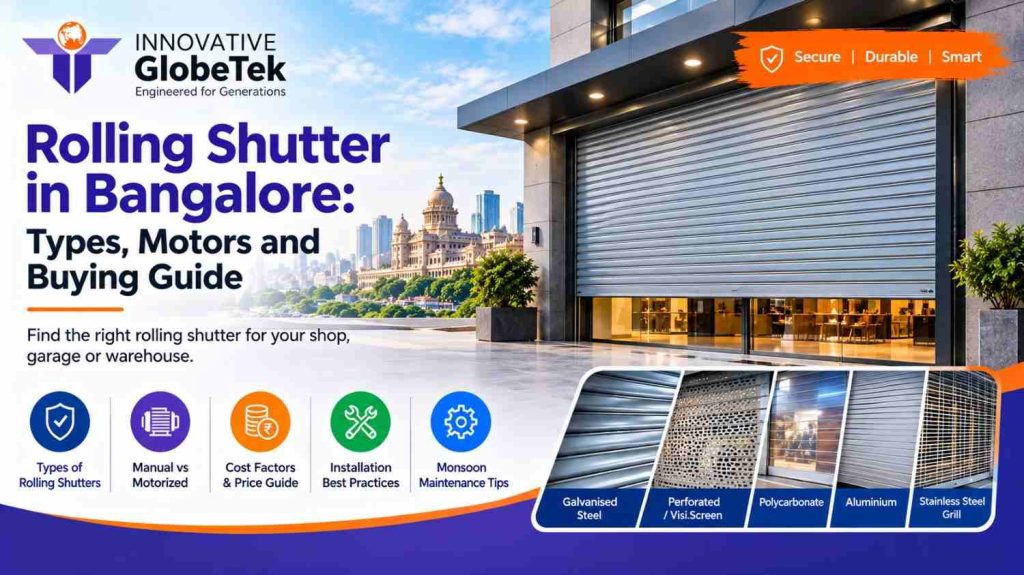
Rolling Shutter in Bangalore: Types, Motors and Buying Guide
A rolling shutter protects a shop, garage, or warehouse opening while taking up almost no space when open. For a quick look at the systems available, start with our motorized rolling shutters range, which covers retail, residential, and industrial models.
This guide explains how to choose a rolling shutter in Bangalore: the main types, manual versus motorized operation, what drives the cost, and how to keep a shutter running smoothly through the monsoon. Each section answers one question.
The Bottom Line
- Galvanised steel shutters suit most shops, godowns, and garages.
- Polycarbonate and grill shutters keep shopfronts visible after hours.
- Motorized operation pays off on wide, heavy, or frequently used openings.
- Proper guide channels and a correctly sized shaft prevent jamming.
- Regular cleaning and lubrication double the working life of any shutter.
What Is A Rolling Shutter And Where Is It Used?
A rolling shutter is a door made of interlocking slats or grill sections that coil around a drum above the opening. It rolls up into a compact box instead of swinging, so a rolling shutter in Bangalore suits shopfronts on busy roads, basement parking, godowns, and factories where space is tight.
Typical uses around the city include:
- Retail shops and showrooms. Commercial streets and market areas where shops open directly onto the pavement.
- Warehouses and godowns. Logistics and storage units that need wide, secure loading openings.
- Factories. Industrial estates with heavy daily use and forklift traffic.
- Residential garages and villas. Independent homes that want a secure, space saving garage door.
- Basements and service areas. Apartment parking entries, electrical rooms, and stores.
Shutters have been standard in India for decades because they are simple, strong, and repairable by local technicians. Spare slats, springs, and motors are easy to source, which keeps downtime short when something does wear out.
They also suit the city’s mixed use streets, where a shop, an office above, and a godown behind often share one building. Each opening can take a different shutter type while keeping a consistent look from the road. The main decisions are the material, the operation method, and the quality of the fixing.
Which Types Of Rolling Shutters Are Available?
The main types are galvanised steel slat shutters, perforated or visi screen shutters, polycarbonate shutters, aluminium shutters, stainless steel grill shutters, and heavy industrial shutters. Each balances security, visibility, weight, and cost differently, so the right choice depends on what the opening protects.
| Type | Visibility | Security | Best for | Watch out for |
| Galvanised steel slat | None | High | Shops, godowns, garages | Heavy on wide openings |
| Perforated or visi screen | Partial | High | Retail displays, ventilated stores | Dust passes through perforations |
| Polycarbonate rolling shutter | High | Medium to high | Showrooms, malls, jewellery and mobile shops | Needs UV stable sheet |
| Aluminium | None or partial | Medium to high | Homes, premium shopfronts, coastal sites | Higher material cost |
| Stainless steel grill | High | High | Banks, malls, ATM lobbies | Offers no weather protection |
| Industrial heavy duty | None | Very high | Factories and logistics hubs | Needs strong structure and motor |
A polycarbonate rolling shutter lets passers by see your products at night while the shop stays locked. Our polycarbonate roller door page explains the panel system in more detail.
Should You Choose Manual Or Motorized Operation?
Choose manual operation for small openings used a few times a day, and a motorized rolling shutter for wide, heavy, or frequently used openings. Motorisation removes strain on staff, makes the shutter close fully every time, and adds remote control and safety features.
How the options compare:
- Push and pull manual. Springs balance the curtain so it can be lifted by hand. Cheapest and fine for small shops.
- Gear operated. A hand chain or crank lifts heavier shutters with less effort.
- Tubular or side motor. An electric motor drives the drum from a switch or remote.
- Centre or direct drive motor. For large industrial openings with heavy curtains.
If you choose a motor, plan for a few extras. Add a battery backup or inverter connection for power cuts, a manual override for emergencies, and a safety edge or photocell that stops the shutter if something is underneath.
A motorized rolling shutter in Bangalore also helps where staff open and close shutters late at night, because it can be operated from inside a vehicle or the shop.
What Affects Rolling Shutter Price?
Rolling shutter price depends mainly on the opening size, slat material and thickness, operation type, finish, and installation conditions. For the same size, a manual galvanised shutter costs least, while polycarbonate, stainless steel, and motorized industrial models cost considerably more.
The main cost drivers:
- Size. Price rises with area, and very wide openings need heavier shafts and brackets.
- Material and gauge. Thicker galvanised steel, aluminium, stainless steel, or polycarbonate each carry different costs.
- Operation. Motors, remotes, and safety devices add to the base shutter price.
- Finish. Powder coating and custom colours cost more than plain galvanised surfaces.
- Hood cover. A box over the coil improves looks and protection but adds material.
- Site work. Lintels, side walls, and access affect installation time.
Location adds a little too. A rolling shutter in Bangalore fitted in a crowded commercial street may need night work or traffic permissions, while an outer industrial area may add transport time.
Always compare quotes on the same slat thickness, shaft size, and motor rating. A low rolling shutter price often hides thinner slats or an undersized motor that burns out early.
For heavy duty openings, see how our industrial rolling doors are specified for continuous use.
How Is A Rolling Shutter Installed Correctly?
A rolling shutter must be installed with straight, plumb guide channels, a shaft sized for the curtain weight, and brackets fixed firmly into the structure. Poor installation is the main reason a rolling shutter in Bangalore jams, sags, or becomes noisy within a year or two.
The Indian Standard IS 6248 for metal rolling shutters and rolling grills sets requirements for materials and fabrication, including limiting the suspension shaft’s deflection to a few millimetres per metre of shutter width.
Key installation points:
- Guide channels. Fixed plumb and parallel, anchored into masonry or steel at regular intervals.
- Brackets and shaft. Sized for the full curtain weight, with the shaft level across the opening.
- Spring tension. Adjusted so a manual shutter stays balanced at any height.
- Bottom rail. Fitted with a rubber seal to keep out rain and dust at floor level.
- Locks. Side locks or central locks fixed into solid structure, not just the channel.
- Electrical work. Motors wired with proper earthing, isolation, and weather protection.
How Do You Maintain A Rolling Shutter Through The Monsoon?
Maintain a shutter by cleaning the guide channels, lubricating moving parts, checking springs or motors, and treating any rust before the rains. A well kept rolling shutter in Bangalore can run smoothly for many years, while a neglected one starts sticking after the first heavy monsoon.
A simple maintenance plan:
- Clean channels monthly. Remove dust, leaves, and debris from the guides.
- Lubricate every few months. Apply a suitable lubricant to channels and the drum bearings.
- Check slats. Straighten or replace dented slats before they catch in the channel.
- Test springs and balance. A manual shutter should not drop or spring up when released midway.
- Inspect motors and remotes. Test limit switches, manual release, and safety devices.
- Treat rust early. Clean and repaint scratches, especially at the bottom rail.
- Book an annual service. A technician can adjust tension and catch worn parts early.
For busy warehouses where shutters open hundreds of times a day, consider whether a faster door type suits you better. Our guide to choosing high speed doors compares them with traditional shutters.
Frequently Asked Questions
Which rolling shutter is best for a shop?
Galvanised steel is the best all round choice for most shops. Choose perforated or polycarbonate shutters if you want window shoppers to see your display after closing.
How long does a rolling shutter last?
A quality galvanised shutter can last 15 years or more with regular cleaning, lubrication, and servicing. Motors and springs usually need replacement before the curtain does.
Can I convert a manual shutter to motorized?
Often, yes, if the shutter, shaft, and brackets are in good condition. A site check confirms whether the curtain weight suits the chosen motor.
What should I check when buying a rolling shutter in Bangalore?
For a rolling shutter in Bangalore, check slat thickness, galvanising or coating, shaft size, lock type, motor brand if motorized, and whether installation and annual servicing are included.
Are polycarbonate shutters strong enough for security?
Yes, for most retail uses. Good polycarbonate panels are highly impact resistant and are held in strong aluminium or steel frames, though heavy industrial sites still prefer steel.
Why is my rolling shutter getting stuck?
The most common causes are dirty or bent guide channels, dented slats, loose springs, or a misaligned shaft. Cleaning and lubrication fix many cases.
Who Should You Call First?
Call a team that supplies, installs, automates, and services shutters, so one company stands behind the whole system. Share the opening size and use, and we will recommend the right rolling shutter in Bangalore for your site. Contact Innovative Globetek for a site visit and quote.