
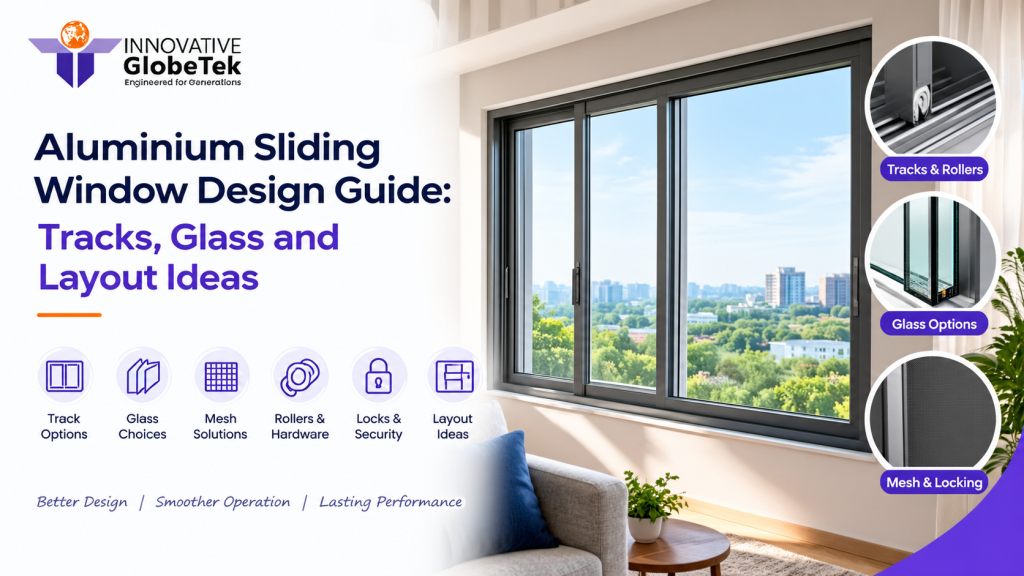
Aluminium Sliding Window Design Guide: Tracks, Glass and Layout Ideas
Sliding windows are the most common window in Indian homes, yet small design choices decide whether they glide for twenty years or jam within two. For an overview of frame systems before you start, browse our range of system aluminium windows.
This guide breaks an aluminium sliding window design into the decisions that matter: track count, panel layout, glass, mesh, rollers, drainage, and locks. Each section answers one question and can be read on its own.
Quick Summary
- Choose 2 track for maximum glass and 3 track when you want a built in mesh shutter.
- Panel width should stay within the roller rating for the glass weight.
- Raised tracks and weep holes stop monsoon water entering the room.
- Double glazed units cut road noise and heat in bedrooms.
- Interlock depth and brush seals decide how well the window keeps out dust.
What Is An Aluminium Sliding Window?
An aluminium sliding window has one or more glass sashes that move sideways along tracks in an aluminium frame. A good aluminium sliding window design opens without projecting into the room or outside the wall, which makes it ideal for bedrooms, living rooms, and balconies facing corridors or walkways.
The design has three main parts:
- The outer frame. Fixed to the wall, it carries the tracks, drainage, and fixings.
- The sashes. Glass panels in aluminium sections that roll on wheels at the bottom.
- The interlock. The overlapping vertical profiles where two sashes meet, fitted with brush seals.
Sliders are popular because they are simple, affordable, and safe on upper floors. Nothing swings out over a street or into a narrow balcony, and there are no hinges to sag over time.
They do have limits. A sliding window never opens fully, because at least one sash always overlaps another. If a room needs maximum airflow, such as a kitchen, a casement window may suit it better.
Should You Choose A 2 Track Or 3 Track Sliding Window?
Choose a 2 track slider when you want the most glass and the cleanest look. Choose a 3 track sliding window when you want a mosquito mesh shutter on its own track, so the mesh and glass can move independently without removing anything.
| Feature | 2 track | 3 track |
| Panels | Two glass sashes | Two glass sashes plus one mesh sash |
| Opening | About half the width | About half the width |
| Mesh | Separate fixed or roll up screen | Built in sliding mesh shutter |
| Frame depth | Slimmer | Deeper |
| Look | Cleaner, more glass | Bulkier, more practical |
| Cleaning | Easier | More tracks to clean |
| Best for | Living rooms, AC rooms, balconies | Bedrooms, kitchens, mosquito prone areas |
Track count also shapes the rest of an aluminium sliding window design. A 3 track frame is deeper, so it needs a thicker wall reveal and slightly heavier sections, while a 2 track frame leaves more room for a wider sash and a cleaner sill line. Measure the wall depth before you settle on either.
A sliding window with mosquito mesh is close to essential in most Indian cities. If you prefer the slimmer 2 track look, a pleated or roll up screen fitted inside the frame gives you mesh without a third track.
Value focused systems like the I2200 aluminium sliding series show how a balanced profile keeps cost in check while still sliding smoothly.
How Many Panels And What Sizes Work Best?
Two panels suit most bedroom windows, while three or four panels suit wide living room openings. The right aluminium sliding window design keeps each sash within the roller’s weight rating, which usually means limiting panel width as the glass gets thicker or the window gets taller.
Common layouts:
- Two panels, equal width. The standard bedroom window. One sash slides behind the other.
- Three panels. A centre fixed or sliding sash with one on each side, useful for wider openings.
- Four panels. Two central sashes that part in the middle, giving a symmetrical opening.
- Slider with fixed glass. Sliding sashes above or beside a fixed pane for a larger view.
Tall panels need extra care. A floor to ceiling sash is heavy, so it needs larger rollers, a deeper profile, and often a lift and slide mechanism. Premium systems such as the I3500 large span sliding system are engineered for exactly these big panels.
Corner windows are possible too. Two sliders can meet at a slim corner post, or one side can be fixed glass while the other slides, which keeps the corner rigid.
Keep sill heights sensible too. In children’s rooms, a sill of around 900 mm or a restrictor lock adds safety on upper floors.
Which Glass And Mesh Options Should You Pick?
Pick glass for safety, heat, and noise, and pick mesh for how often you open the window. Toughened glass is the safe baseline, double glazed units help near busy roads, and a sliding or pleated insect screen keeps out mosquitoes without blocking breeze.
The Whole Building Design Guide explains that the sealed air space in an insulating glass unit reduces both heat flow and sound transmission compared with a single pane.
Glass choices for sliders:
- 5 to 6 mm toughened. Standard for bedroom and kitchen windows.
- 8 mm toughened or laminated. For larger sashes and upper floors.
- Double glazed units. For road facing and air conditioned rooms.
- Frosted or reeded. For bathrooms and street facing ground floor rooms.
- Tinted or coated. For west facing walls with harsh afternoon sun.
Mesh choices:
- Sliding mesh sash. Built into a 3 track frame.
- Pleated mesh. Folds away neatly and suits 2 track frames.
- Roll up mesh. Retracts into a small cassette at the top or side.
Which Details Keep Rain, Dust And Noise Out?
Water, dust, and noise get in through the bottom track and the interlock, so that is where an aluminium sliding window design needs the most attention. Raised inner tracks, weep holes, brush seals, and a tight interlock make the difference between a dry sill and a puddle after every storm.
Check for these on any sample or drawing:
- Stepped or raised inner track. The inside edge sits higher than the outside, so water drains outward.
- Weep holes with covers. Slots in the outer frame let water escape while flaps block wind.
- Brush seals and wool piles. Along the interlock and sash edges to stop dust and draughts.
- EPDM glazing gaskets. They hold glass firmly and stay flexible in summer heat.
- Sealed perimeter. Silicone between the frame and wall, applied after the plaster cures.
An aluminium sliding window for balcony openings faces the most wind driven rain, so ask for the deepest track profile the budget allows there.
How Do You Plan An Aluminium Sliding Window Design Step By Step?
Plan an aluminium sliding window design by measuring first, then choosing tracks, panels, glass, mesh, hardware, and finish in that order. Each decision narrows the next, so following the sequence avoids ordering glass that is too heavy for the chosen rollers or profile.
- Measure each opening. Record width, height, wall depth, and floor level.
- Choose 2 track or 3 track. Base it on mesh needs and the look you want.
- Decide panel count and sizes. Keep sashes within the roller rating.
- Select glass. Match thickness and type to size, floor level, and noise.
- Pick mesh type. Sliding, pleated, or roll up.
- Confirm hardware. Rollers, multipoint or hook locks, and restrictors where children sleep.
- Choose finish and colour. Match other windows and railings on the same facade.
- Plan installation. Fix frames after plastering and before final painting, then seal.
If you are also weighing frame materials, our uPVC vs aluminium windows comparison sets out the trade offs for Indian homes.
Frequently Asked Questions
Which is better, 2 track or 3 track sliding windows?
A 2 track window gives more glass and a slimmer look, while a 3 track window adds a built in mesh shutter. Choose based on how much you need mosquito protection.
What glass thickness is used in aluminium sliding windows?
Most home sliders use 5 to 6 mm toughened glass. Large sashes, upper floors, and noisy locations often move up to 8 mm, laminated glass, or double glazed units.
How do I stop rainwater leaking through a sliding window?
Choose a frame with a raised inner track and weep holes, keep the drainage slots clean, and make sure the perimeter is sealed with silicone after plastering.
Can sliding windows be made soundproof?
They can be made much quieter. Double glazed or laminated glass, tight interlocks, and good brush seals reduce road noise noticeably, though casements seal slightly better.
What is the best aluminium sliding window design for bedrooms?
For most bedrooms, the best aluminium sliding window design is a 3 track slider with toughened glass and a mesh shutter, adding double glazing if the room faces a busy road.
How often should sliding window rollers be serviced?
Clean the tracks every few months and check rollers once a year. Replacing worn rollers early keeps the sash from dragging and damaging the track.
How Do You Get Started?
Share your window sizes and room details, and our engineers will recommend an aluminium sliding window design with the right tracks, glass, and mesh for each opening. Contact Innovative Globetek to arrange a site measurement in Bangalore.