
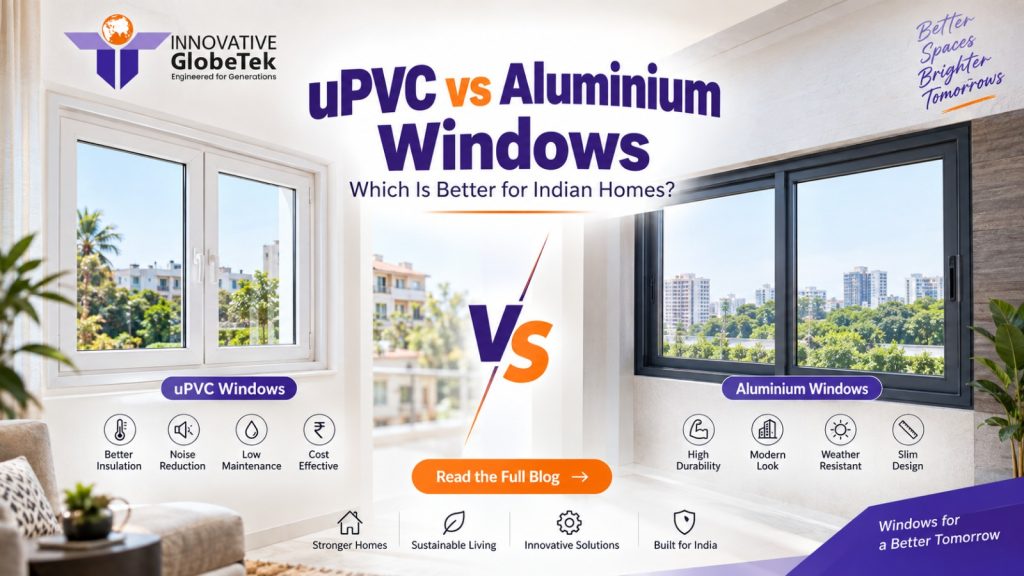
uPVC vs Aluminium Windows: Which Is Better for Indian Homes?
Pick the wrong window frame and you live with it for decades: a west bedroom that bakes every afternoon, a balcony slider that drags, or bulky frames around a view you paid for. The right choice depends on the opening, not the brochure.
This guide to uPVC vs aluminium windows compares insulation, strength, noise, upkeep and cost in Indian conditions. We design and install system aluminium windows for homes and high-rises, not uPVC, so where uPVC is the better pick, we say so plainly.
The Short Version
- uPVC insulates better as standard and suits most regular-sized openings.
- Aluminium is far stronger, so slim frames can carry large, heavy panes.
- A thermal break closes much of aluminium’s insulation gap.
- In Indian heat, the glass often matters more than the frame.
- Basic aluminium is cheapest, uPVC is mid-range, and system aluminium costs most.
What Is The Real Difference Between UPVC And Aluminium Frames?
The core difference in uPVC vs aluminium windows is the frame material. uPVC is rigid, unplasticised PVC that insulates well but needs steel inside to stay stiff, while aluminium is a strong, light metal that conducts heat unless the frame has a thermal break.
Each material also comes in very different quality tiers, and the tier matters as much as the material:
- uPVC windows use hollow, multi-chambered profiles with fusion-welded corners and galvanised steel reinforcement inside. Most are white, with wood-grain or grey foils as options.
- Conventional aluminium windows are simple extruded sections, usually two-track sliders with brush seals and no thermal break.
- System aluminium windows are engineered profile families in 6063-T6 alloy, with polyamide thermal breaks, EPDM gaskets, drainage channels and multi-point locks, designed and tested as one unit.
A thermal break is a strip of reinforced polyamide that splits the aluminium profile into an inner and an outer half. Heat has to cross the plastic to reach the room, which slows it sharply.
When a quote simply says “aluminium windows”, ask which of these two tiers it means. The price gap between them is large, and so is the gap in insulation, sealing and hardware.
Which Keeps Your Home Cooler, UPVC Or Aluminium?
Frame for frame, uPVC keeps more heat out, because PVC conducts heat roughly a thousand times more slowly than aluminium. A thermally broken aluminium frame narrows that gap sharply, and in hot Indian cities the glass you specify usually decides indoor comfort more than the frame does.
The US Department of Energy’s guidance on window frames and glazing makes both points. It says metal frames need a thermal break between their inner and outer parts, and it names glazing as the most important energy choice in most windows.
Most Indian cities need cooling far more than heating. That shifts the priority from trapping warmth to blocking solar gain, which is a job for the glass and for shading such as chajjas, deep overhangs and external blinds.
The frame is only a thin border around the glass, so for heat alone the uPVC vs aluminium windows debate is closer than most brochures suggest. For west and south-facing rooms, spend on the glass first:
- Double glazing with a sealed air or argon gap slows heat conducted through the pane.
- Solar-control or low-e coated glass reflects heat before it enters the room.
- Laminated glass adds safety and cuts outside noise at the same time.
Aluminium Vs UPVC Windows: Which Handles Large Openings Better?
Aluminium handles large openings far better. Its strength lets slim profiles carry heavy double glazing across wide spans and tall sashes, while uPVC needs bulkier sections and internal steel to stay rigid at the same size, which eats into glass area and makes big sliders heavier to move.
Balcony sliders and floor-to-ceiling glass are where the aluminium vs uPVC windows gap is widest. Our I3500 slimline sliding system, for example, carries shutters up to 2.8 metres tall and glass up to 24 mm thick, with a 20 mm sightline at the interlock.
Height matters too. Wind pressure rises on the upper floors of towers, and aluminium’s stiffness keeps large panes from flexing and whistling in a storm.
Check mosquito mesh compatibility early. Some of the slimmest sliding and concealed-frame systems, the I3500 included, cannot take a mesh shutter, while simpler sliding series can.
uPVC remains a sound choice for standard bedroom, kitchen and bathroom windows. Spans there are modest, so its bulkier profile costs you little glass and its insulation counts for more.
How Do UPVC Vs Aluminium Windows Compare On 9 Key Factors?
The table below scores uPVC vs aluminium windows on the nine factors homeowners ask us about most. Conventional aluminium and thermally broken system aluminium get separate columns, because treating them as one product is the most common mistake in this comparison.
| Factor | uPVC | Conventional aluminium | System aluminium |
| Heat insulation | Very good | Poor | Good, with a thermal break |
| Strength and panel size | Moderate, needs steel inside | Good | Excellent, large heavy panes |
| Frame sightlines | Wide | Slim | Slimmest |
| Noise control | Very good with the right glass | Fair | Very good with the right glass |
| Monsoon sealing | Very good, welded corners | Fair, brush seals | Very good, EPDM gaskets and drainage |
| Movement in heat | About three times more than aluminium | Low | Low |
| Fire behaviour | Self-extinguishing, softens near 75 to 80°C | Does not burn | Does not burn |
| Upkeep | Wipe clean, no painting | Seals and rollers wear sooner | Wipe clean, yearly hardware check |
| Relative cost | Mid-range | Lowest | Highest |
Colour and style are the other practical differences. Aluminium takes almost any powder-coated or anodised finish and allows near-frameless designs such as our I60 Invisible Series, which hides the outer frame inside the wall.
uPVC is mostly white or foil-laminated, and dark uPVC frames absorb more heat in strong sun. Aluminium also recycles repeatedly without losing quality, which helps if your project is chasing a green building rating.
Which Needs Less Maintenance In Indian Weather?
Both need little care when they are well made. uPVC never needs painting and cannot rust or feed termites, while powder-coated aluminium holds its colour for years. In both, the rollers, hinges and seals wear out long before the frame does.
Near the coast, specify marine-grade powder coating or anodising on aluminium, and stainless steel hardware on either material. With uPVC, insist on profiles with proper UV stabilisers, because cheap compounds can yellow after years of Indian sun.
Dust is the other local enemy. Sliding tracks collect grit from traffic and construction, so a monthly vacuum of the track keeps rollers quiet and stops brush seals from clogging.
A simple routine keeps either type working smoothly:
- Clear the drainage slots in the bottom track before the monsoon arrives.
- Wipe tracks and rollers, then use a silicone spray rather than oil or grease.
- Check gaskets and brush seals once a year and replace any that have shrunk or cracked.
- Rinse salt deposits off frames every few weeks if you live near the sea.
Which Costs More, UPVC Or Aluminium Windows?
Basic aluminium sliders are the cheapest frames on the Indian market, uPVC usually sits in the middle, and thermally broken system aluminium costs the most. The glass, hardware and opening size often move the final quote more than the frame material itself.
Price is where most uPVC vs aluminium windows decisions are really made, so compare quotes on an identical specification. Ask every supplier to price the same items:
- Glass type and thickness, and whether it is single or double glazed.
- Hardware brand, number of locking points and roller rating.
- Opening style, since casement and tilt-and-turn windows cost more than sliders.
- Mosquito mesh, sub-frames, installation charges and GST.
Ask for a price per window as well as a rate per square foot. Small windows cost more per square foot once locks and rollers are added, so a flat rate can hide the real total.
Think in cost per year of service, too. A frame that slides smoothly for decades without repainting often beats a cheaper one that needs new rollers and seals within a few years.
If budget is the main limit but you still want metal, a value-engineered sliding system can close the gap. Our I2200 budget sliding series was built for developer projects, accepts a mosquito mesh and uses 5 or 6 mm glass.
How Do You Choose The Right Frame For Each Room?
Settle uPVC vs aluminium windows room by room rather than for the whole house. Most homes end up with a mix, and these seven steps show where each frame earns its place.
- List every opening with its width, height and the direction it faces.
- Mark rooms that face a busy road or the afternoon sun, because glass choice matters most there.
- Flag large sliders, corner windows and floor-to-ceiling glass for aluminium.
- Consider uPVC for standard bedroom and bathroom windows if insulation and budget come first.
- Pick a finish: white suits uPVC, while dark or custom colours suit powder-coated aluminium.
- Decide where you need a mosquito mesh before you choose a profile series.
- Get the profile series, glass specification and warranty in writing from every supplier.
Frequently Asked Questions
Which is better, uPVC or aluminium windows, for a Bengaluru apartment?
For most Bengaluru apartments, uPVC suits standard bedroom windows on a tighter budget, while system aluminium suits balcony sliders, large glazing and upper floors. Many owners use both in one home.
Are uPVC windows safe in a fire?
uPVC is self-extinguishing, so it will not keep burning once the flame source is gone, but it softens at around 75 to 80°C. Aluminium does not burn and holds its shape far longer.
Do aluminium windows rust near the sea?
Aluminium does not rust, but cheap coatings can corrode in salty air. Specify marine-grade powder coating or anodising and stainless steel hardware for homes close to the coast.
Can I use dark-coloured uPVC windows in hot cities?
You can, but dark foils absorb more heat and uPVC expands about three times as much as aluminium. For dark or custom colours in strong sun, powder-coated aluminium is the safer choice.
Which frame is better for a home on a noisy main road?
Both work if the glass and seals are right. On a noisy road, the uPVC vs aluminium windows choice matters less than laminated or double glazing with well-fitted gaskets.
How long do uPVC and aluminium windows last?
Both can last for decades when they are installed well. Rollers, hinges and gaskets wear out first, so choose a supplier who stocks spares and offers after-sales servicing.
Ready To Compare Frames For Your Home?
Measure your openings, note which rooms face the sun or the road, and bring that list to our Experience Center on K.H. Road, Shanti Nagar. If you are still weighing uPVC vs aluminium windows, speak to our window specialists and we will tell you honestly which openings need system aluminium.