
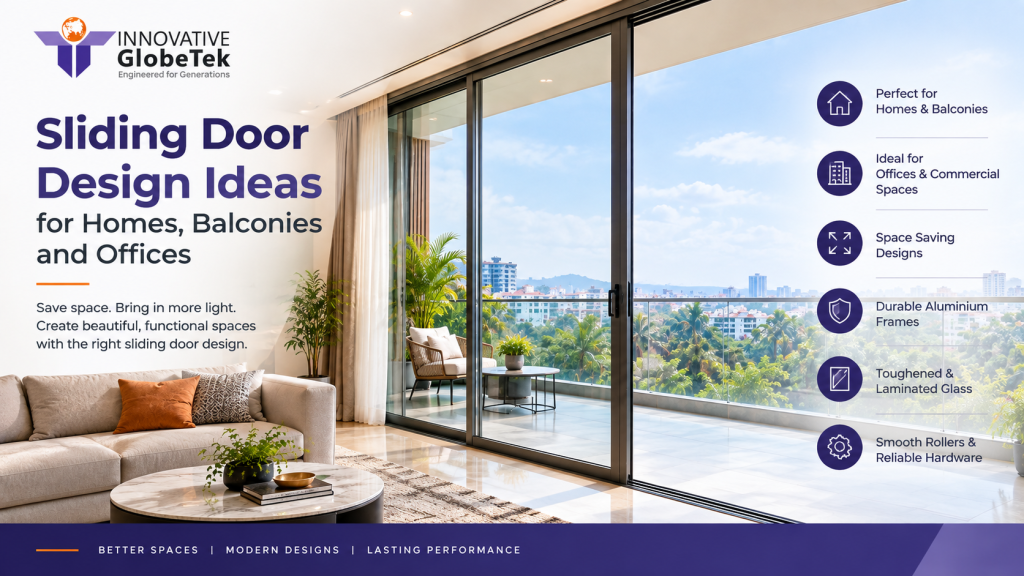
Sliding Door Design Ideas for Homes, Balconies and Offices
A sliding door saves the floor space a swing door wastes, but only when the track, frame, and glass suit the opening. Before you pick a colour, look at how an engineered system like our I3500 aluminium sliding door system carries large glass panels on slim interlocks.
This guide walks through every sliding door design choice that matters: the type of slide, the frame, the glass, the hardware, and the planning steps. Each section answers one question, so you can jump straight to the part you need.
The Short Version
- Pick the slide type first: bypass, pocket, barn, lift and slide, telescopic, or automatic.
- Aluminium frames handle Bangalore’s two monsoons better than wood or mild steel.
- Toughened or laminated glass is the safe default for every glazed panel.
- Rollers and locks decide whether the door still glides after five years.
- Automatic sliders suit offices, clinics, and shopfronts, not bedrooms.
What Is A Sliding Door And Where Does It Work Best?
A sliding door opens by moving sideways along a track instead of swinging on hinges. A good sliding door design frees the arc a hinged door needs, so it suits balconies, wardrobes, kitchens, and wide living room openings where furniture sits close to the wall.
The space saving is real. A 900 mm hinged door sweeps roughly 0.6 square metres of floor that you cannot furnish. A slider gives that area back.
Sliders work best in these places:
- Balconies and terraces. Wide glass panels bring in light and a view without a door swinging into a small balcony.
- Living and dining partitions. Large panels can stay open for gatherings and close to hold air conditioning in one zone.
- Wardrobes and walk in closets. No swing clearance is needed in front of the shutters.
- Office cabins and meeting rooms. Glass sliders keep a floor plate open while giving acoustic separation.
- Shop, clinic, and lobby entrances. These are usually automated so people pass through hands free.
They are a poor fit in two cases. A bathroom door that must seal tightly against moisture is better hinged. An opening with no wall beside it has nowhere for the panel to park, unless you build a pocket into the wall.
What Are The Main Types Of Sliding Doors?
The main types of sliding doors are bypass, pocket, barn style, lift and slide, telescopic, and automatic. They differ in where the panel parks when open, how tightly it seals when closed, and how much clear opening width you get from the frame.
| Type | How it moves | Best for | Watch out for |
| Bypass (2 or 3 track) | Panels slide past each other on parallel tracks | Balconies, windows, wardrobes | Only part of the opening is ever clear |
| Pocket sliding door | Panel disappears into a cavity in the wall | Small rooms, kitchens, en suites | Needs planning before the wall is built |
| Barn style | Hangs from an exposed top rail | Interiors, studios, cafes | Weak seal, gaps at the edges |
| Lift and slide | Handle lifts the panel before it glides, then drops to seal | Large balcony and garden openings | Higher cost, heavier hardware |
| Telescopic | Several panels move together at different speeds | Wide entrances with little side space | More moving parts to maintain |
| Automatic | Motor and sensor open the panel on approach | Offices, hospitals, retail | Needs power backup and servicing |
If you are planning an entrance rather than a room, our guide to types of automatic doors compares sensor driven options in more depth.
A pocket sliding door is the best space saver of the six, but it is a structural decision. The cavity has to be framed while the wall goes up, and the track must be reachable for service later, usually through a removable head panel.
Which Frame Material Should You Choose?
For most homes in Bangalore, aluminium is the safest frame material for a sliding door design. It does not swell in the monsoon, it does not rust like mild steel, and it carries wide glass panels on slim profiles that timber cannot match at the same size.
Here is how the four common materials compare in daily use:
- Aluminium. Strong, light, and stable. An aluminium sliding door with a powder coated or anodised finish needs little more than track cleaning. Thermally broken profiles add insulation where you need it.
- uPVC. Good sealing and insulation at a moderate price. Profiles are bulkier, and very large panels need steel reinforcement inside the frame.
- Wood. Warm and traditional, but it moves with humidity. Expect sticking in the rainy months unless the timber is well seasoned and sealed every year or two.
- Steel. Very strong and good for security doors. Mild steel needs regular painting to hold off rust, so use galvanised or stainless grades outdoors.
Finish matters as much as the metal. Powder coating gives you almost any colour, while anodising gives a harder, metallic surface that resists scratches. For balconies facing the afternoon sun, lighter shades stay cooler to the touch.
How Do You Choose The Right Glass For A Sliding Door?
Choose glass by safety first, then comfort. Every glazed sliding door design should use toughened or laminated glass, because people walk into large panels. After that, pick single glazing, double glazed units, or tinted and coated glass depending on sun, noise, and budget.
Glass also controls how warm the room gets. ENERGY STAR estimates that a standard double pane window still lets roughly three quarters of the sun’s heat through, which is why coated glass is worth the extra cost on west facing openings.
A quick guide to common choices:
- Toughened glass, 8 to 10 mm. The everyday safety choice. It breaks into small blunt pieces rather than sharp shards.
- Laminated glass. Two panes bonded to a plastic interlayer that holds the pieces in place if it cracks. Better for security and noise.
- Double glazed units. Two panes with a sealed air gap. Useful near busy roads and in air conditioned rooms.
- Tinted or low emissivity glass. Cuts glare and heat gain on sunny facades without making rooms gloomy.
- Frosted or fluted glass. Keeps privacy for bathrooms, cabins, and wardrobe shutters.
Heavier glass needs stronger rollers, so settle the glass before you finalise the hardware. That order saves you from rollers that flatten within a year.
Which Hardware Details Make A Sliding Door Last?
Rollers, tracks, seals, and locks decide how long a sliding door design keeps working. A panel that glides on day one can drag within two years if the rollers are undersized for the glass weight or the bottom track has no drainage for rainwater.
Check these details on any quote you receive:
- Rollers rated for the panel weight. Ask for sealed bearing rollers in stainless steel or reinforced nylon, adjustable for height.
- Drainage in the bottom track. Weep holes let rainwater escape instead of flooding the floor during a downpour.
- Brush seals and gaskets. These keep out dust, insects, and wind driven rain along the interlock.
- Multipoint locks and anti lift blocks. They stop the most common forced entry method, lifting the panel off its track.
- Soft close dampers. Useful on heavy interior panels and around children.
Seals matter even more in hospitals and labs, where the door has to hold air pressure. That is why operating theatres use hermetic sliding doors for cleanrooms rather than standard residential sliders.
How Do You Plan A Sliding Door Design Step By Step?
Plan a sliding door design in the order the builder needs decisions: opening size first, then slide type, frame system, glass, hardware, and finish. Getting the sequence right avoids expensive changes, such as cutting a finished floor to recess a track.
- Measure the opening and the parking space. A bypass slider needs no side space, while a pocket or barn door needs a clear wall at least as wide as the panel.
- Choose the slide type. Match it to how often the door opens and whether it must seal against weather.
- Pick the frame system. Decide on material, profile depth, and whether you need a thermal break.
- Specify the glass. Settle thickness, safety type, and any coating or tint.
- Select hardware and locks. Confirm roller ratings, lock type, and seals.
- Check the site. Confirm the lintel can carry the load, the floor is level, and the threshold height works for wheelchairs or pets.
- Fix the finish and colour. Match window frames and railings for a consistent facade.
- Book installation and a service plan. Ask who will adjust rollers and replace seals in year two.
Frequently Asked Questions
Which sliding door is best for a balcony?
A two or three track aluminium slider with toughened glass and a mesh shutter suits most balconies. Choose a raised track with drainage holes so monsoon rain does not flow indoors.
Is a sliding door cheaper than a hinged door?
For small openings a hinged door usually costs less. Sliders become better value on wide openings, because one frame covers a span that would otherwise need several hinged leaves.
How long does an aluminium sliding door last?
A well installed aluminium sliding door can last 20 years or more. Rollers and brush seals wear first, so plan to replace them every few years instead of the whole door.
Can a sliding door be made secure?
Yes. A multipoint lock, anti lift blocks in the top track, and laminated glass together stop the most common ways burglars force sliders open.
What is the most popular sliding door design for living rooms?
A floor to ceiling slim aluminium slider is the most requested sliding door design for living rooms, because narrow interlocks keep the view open and let daylight reach deeper into the room.
Do sliding doors work in small flats?
Yes, often better than hinged doors. A pocket or wall mounted slider frees the swing area, which can add usable floor in a compact bedroom, kitchen, or utility room.
Ready To Plan Your Sliding Door?
Send us your opening sizes and a few photos of the space. Our engineers will suggest a sliding door design, frame system, and glass specification that suit the room and your budget. Contact the Innovative Globetek team to book a site visit anywhere in Bangalore.